
The Great Wildebeest Migration in Kenya & Tanzania (2026 Complete Guide)
Why the Great Wildebeest Migration Happens: Nature’s Most Spectacular Journey.
Every year, over 1.5 million wildebeests, accompanied by hundreds of thousands of zebras and gazelles, embark on one of the most extraordinary wildlife movements on Earth. Known as the Great Wildebeest Migration, this natural phenomenon unfolds across the vast plains of Kenya and Tanzania, captivating travelers, photographers, and wildlife enthusiasts from around the world.
But what causes this incredible migration?
The Search for Fresh Grass and Water
At its core, the wildebeest migration is driven by a simple need: survival.
The wildebeests follow seasonal rainfall patterns across the Serengeti-Mara ecosystem. As rains fall in different regions throughout the year, fresh grass begins to grow. Wildebeests instinctively move toward these nutrient-rich grazing areas to find food and water.
Unlike humans who can predict weather patterns using technology, wildebeests rely on instinct developed over thousands of years. They can sense distant rainstorms and begin moving toward areas where new vegetation is emerging.
A Circular Journey
The migration is not a one-way trip but a continuous circular movement.
The journey typically begins in Tanzania’s southern Serengeti, where hundreds of thousands of calves are born between January and March. As the dry season approaches, the herds move northwest in search of greener pastures.
By July and August, many herds reach Kenya’s world-famous Maasai Mara, where abundant grasslands provide a temporary haven. As rains return to Tanzania later in the year, the animals begin their journey south once again.
The Dramatic River Crossings
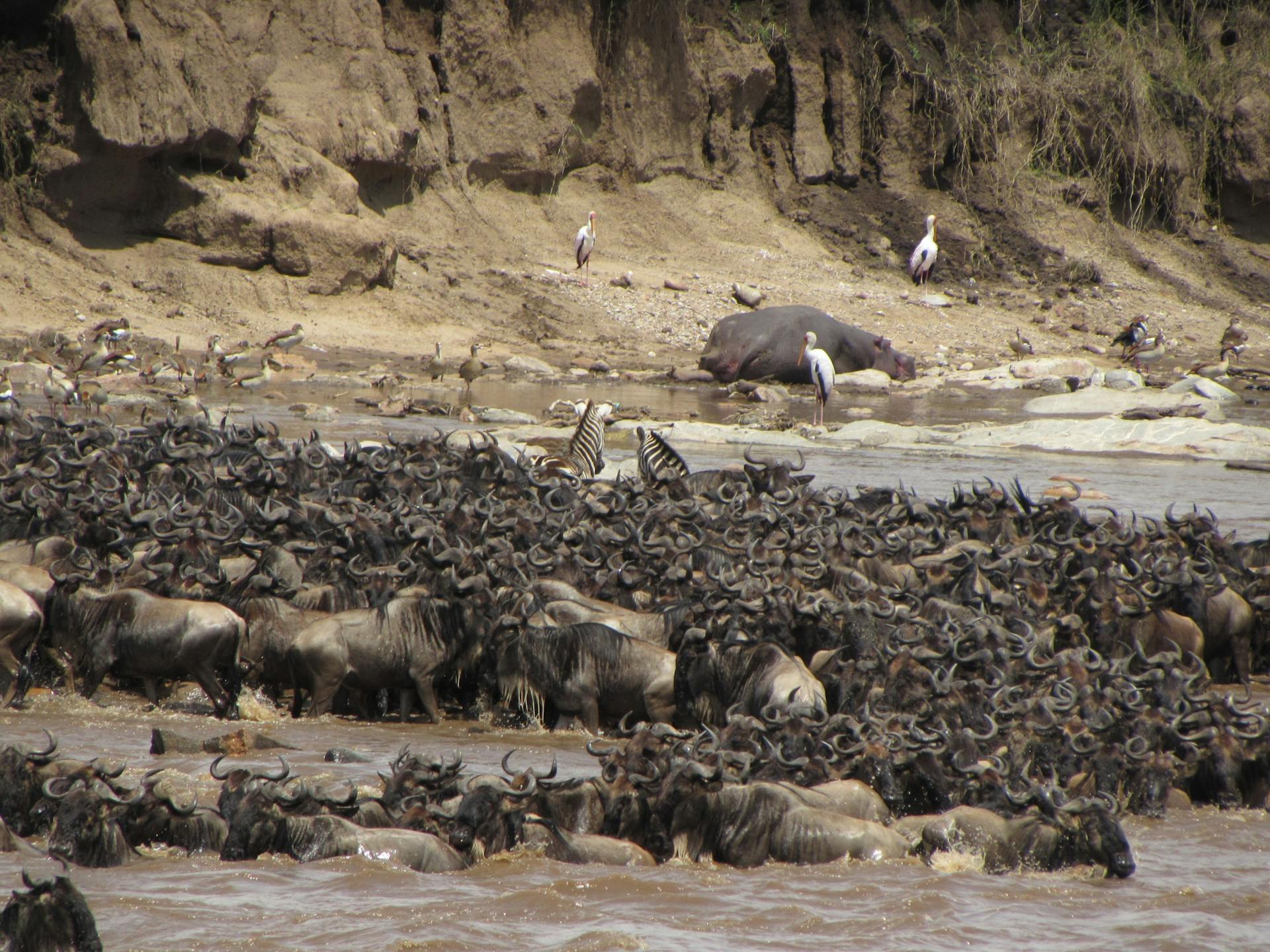
One of the most iconic moments of the migration occurs when the herds cross the Mara River.
Faced with strong currents and lurking crocodiles, thousands of wildebeests gather at riverbanks before making a dramatic leap into the water. These crossings are unpredictable, emotional, and often breathtaking to witness.
For many safari travelers, experiencing a Mara River crossing is a once-in-a-lifetime wildlife encounter.
Nature’s Balance
The migration plays a crucial role in maintaining the health of the ecosystem.
As millions of animals move across the landscape, they graze grasslands, disperse seeds, and provide food for predators such as lions, cheetahs, leopards, and hyenas. This movement helps sustain one of Africa’s richest and most diverse wildlife habitats.
Why You Should Experience It
The Great Wildebeest Migration is often called “The Greatest Show on Earth” for good reason. It is a powerful reminder of nature’s rhythms, resilience, and beauty.
Whether you’re witnessing endless herds stretching across the horizon, observing a thrilling river crossing, or listening to the sounds of the African wilderness at sunrise, the migration offers memories that last a lifetime.
At Rilassante Tours, we help travelers experience this remarkable event through carefully crafted safari adventures that bring you closer to nature while ensuring comfort, safety, and unforgettable moments.
Plan Your Migration Safari
The best time to witness the migration in Kenya’s Maasai Mara is typically between July and October, though wildlife viewing remains exceptional throughout the year.
Ready to experience the Great Wildebeest Migration?
Let Rilassante Tours take you on a journey into the heart of Africa’s most extraordinary wildlife spectacle.
Website: www.rilassantetours.com
Email: inquiries@rilassantetours.com
Kenya: +254 793 986 000
What to Pack for a Great Wildebeest Migration Safari
Packing well can make your safari more comfortable and enjoyable. The weather in the Maasai Mara can vary throughout the day, with cool mornings, warm afternoons, and chilly evenings, so it’s best to pack light layers.
Here are some essentials to bring for your Great Wildebeest Migration safari:
* Neutral-colored clothing such as khaki, green, beige, or brown to blend into the natural environment and avoid attracting insects.
* Comfortable walking shoes or lightweight hiking boots for game drives and lodge activities.
* A wide-brimmed hat and sunglasses to protect yourself from the African sun.
* High-SPF sunscreen and lip balm to prevent sunburn during long hours outdoors.
* Binoculars to enjoy distant wildlife sightings and river crossings in greater detail.
* A good camera with extra batteries, memory cards, and a zoom lens to capture unforgettable moments.
* A light waterproof jacket for unexpected rain showers, especially during the migration season.
* Insect repellent to help protect against mosquitoes, particularly in the evenings.
* Reusable water bottle to stay hydrated throughout your safari.
* Personal medications and a basic first-aid kit for added peace of mind.
* Power bank and universal travel adapter to keep your devices charged during your journey.